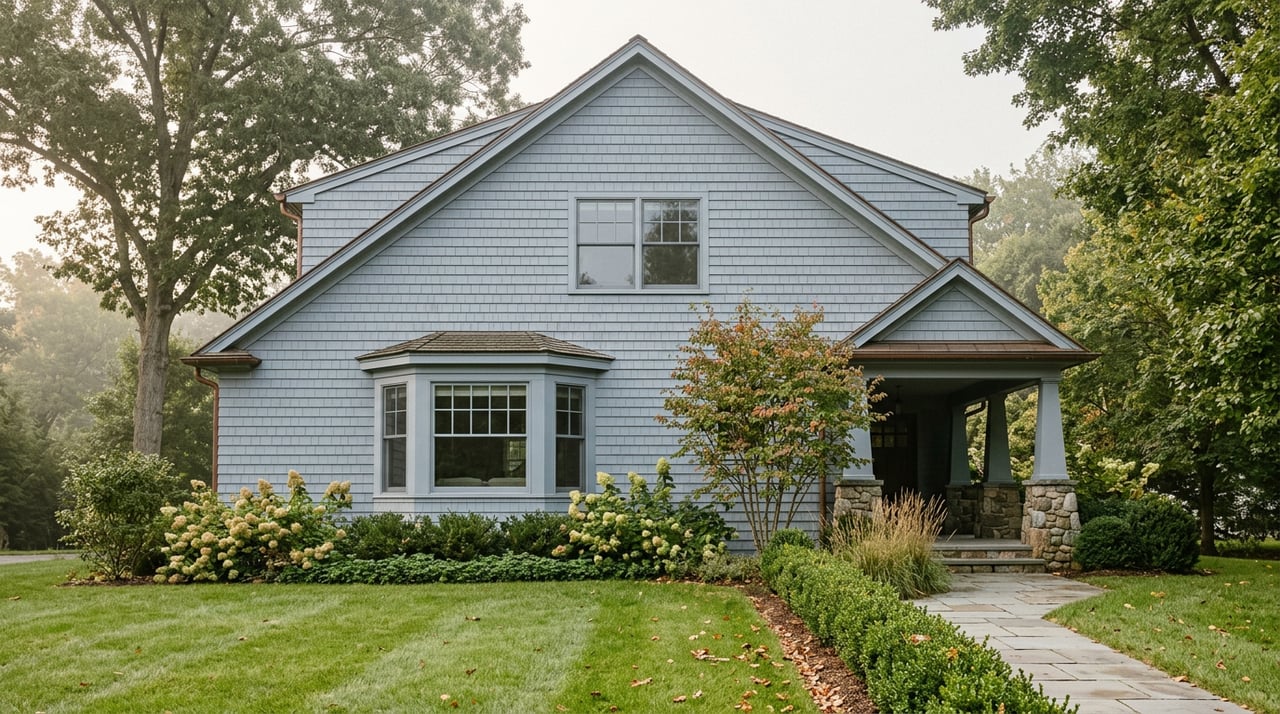
In 2018, Tom and Cindy Redmond paid $6.8 million for a home on Bushaway Road, the narrow strip of land that separates Wayzata Bay from Grays Bay. They tore it down. In its place they built an 8,300-square-foot house and a detached garage so large that neighbors started calling it the Garage Mahal.
Three years later, two of those neighbors, former Minnesota Vikings linebacker Chad Greenway and former UnitedHealth Group executive Ken Ehlert, sued. Their claim was specific: the new house sat 95 feet from the shoreline, in a city where the ordinance required 260 feet. The lawsuit also alleged the property exceeded the city's cap on impervious surface and that the detached garage was larger than local rules allowed.
The house was fully built, fully permitted, and fully occupied by the time the case reached its final ruling in August 2024. It took a Hennepin County judge, competing engineering experts, and roughly three years of litigation to determine whether the Redmonds could keep it.
That is the part of buying lakeshore in Wayzata that rarely shows up in a listing description. The price tag tells you what the seller wants. It tells you nothing about whether the structure sitting on the lot is standing on solid legal ground, or whether the permitted footprint you're inheriting could still be challenged by the people living next door.
The Numbers That Mattered More Than the Purchase Price
The Redmond case turned on a handful of figures that had nothing to do with square footage or view corridors:
- 260 feet. The shoreline setback the city of Wayzata required for new construction on that stretch of Bushaway Road.
- 95 feet. How close the new home actually sat to the water, built under a variance the city granted.
- 20 percent. The cap on impervious surface, the portion of a lot covered by roof, driveway, and patio that can't absorb rainwater.
- 30 days. The window state law gives neighbors to formally contest a city-granted variance before it becomes very difficult to challenge.
That last number is the one most buyers never think about. Judge Edward Wahl initially ruled that Greenway and Ehlert had missed their chance to contest the zoning variances themselves, because they hadn't filed objections within 30 days of the city's approval. Their case survived only because a separate claim, tied to a state environmental rule rather than the local zoning ordinance, remained open.
The Slope That Wasn't a Bluff
That surviving claim came from the Minnesota Environmental Rights Act, which bars new construction in what the law calls a bluff impact zone. Whether the Redmonds' lot qualified came down to a technical distinction between a bluff and a slope, measured by the vertical rise from the toe to the top of the grade.
The Redmonds' attorney, William Skolnick, later described the dispute this way in comments to the Star Tribune: the case hinged on measuring the top and toe of the slope, and whose expert the court found credible. The neighbors' expert had worked on only one prior project involving shoreland regulations. The Redmonds' expert had spent nearly three decades drafting and administering shoreland ordinances for municipalities. Judge Wahl sided with the more experienced expert and ruled the home sat on a slope, not a bluff, closing the case in the Redmonds' favor.
Six years passed between the Redmonds' purchase and the final resolution of whether their new home could legally stay. For most of that window, the house stood finished, landscaped, and lived in, while its legal status remained genuinely open. That's the timeline a buyer should hold in mind before assuming a completed home on the water means a settled question.
Land Is the Product. The House Is the Packaging.
The Redmond case is really a story about how much of a Wayzata lakeshore transaction rests on paperwork most buyers never read closely. A separate, unrelated listing on Lake Minnetonka shows the flip side of the same idea.
In 2018, a listing agent describing a 7-acre estate with 535 feet of shoreline told the Star Tribune plainly that the 6,000-square-foot house on it was likely headed for demolition, because the land itself was worth more to most buyers than the structure standing on it. As she put it:
"The value is in the land."
That's not a one-off comment about a single property. It reflects how the Lake Minnetonka market actually prices lakeshore. The house is often a placeholder. What buyers are really purchasing is a permitted footprint on a finite stretch of shoreline, and the rules governing what can legally sit on that footprint, from setback distance to impervious surface to garage size, are the real asset boundaries. The Redmond case simply shows what happens when the placeholder gets built before every one of those boundaries is fully settled.
What to Check Before You Fall for the Lot
None of this means lakeshore in Wayzata is a bad bet. It means the due diligence looks different from an inland purchase. Before writing an offer on a lakeshore property, or before finalizing plans to tear down and rebuild, it's worth having a local agent or attorney walk through:
- Variance history on the parcel. Has the current structure, or any structure before it, been built under a city variance for setback, impervious surface, or accessory structure size? If so, was that variance ever formally challenged within its window, or does it remain open to a future claim under state environmental rules?
- Bluff versus slope status. If the lot has any grade change near the water, whether that qualifies as a protected bluff under Minnesota's shoreland rules is worth confirming before you assume a certain footprint is buildable.
- Dock and slip rights. Owning lakeshore gives you the right to apply for a dock under Lake Minnetonka Conservation District rules. It doesn't guarantee approval, especially on narrower lots, so confirm eligibility before you count on it.
- Condition of shoreline structures. Retaining walls, seawalls, and older docks carry real deferred maintenance costs that a standard home inspection won't necessarily catch.
None of these checks are exotic. They're the kind of questions a concierge-style transaction process is built to ask before they become a problem three years into ownership.
Common Questions
What's the difference between a bluff and a slope under Minnesota law? Minnesota's shoreland rules restrict construction in bluff impact zones, defined by the vertical rise between the toe and top of a grade near the water. Whether a given slope meets that legal threshold is a technical determination, and in the Redmond case it came down to competing expert testimony rather than an obvious visual line.
How long do neighbors have to challenge a city-approved variance? Under the ordinance at issue in the Redmond case, objections to a city-granted variance needed to be filed within 30 days. Miss that window, and a separate legal path, such as a state environmental claim, may be the only route left to challenge the construction.
Does a finished, occupied home mean its permits are safe from challenge? Not automatically. The Redmond home was complete and lived in for years while a court still weighed whether part of its construction violated state bluff protections. A completed structure is not the same as a legally settled one.
Is a dock guaranteed if I buy lakeshore property? Owning frontage gives you the right to apply for a dock under Lake Minnetonka Conservation District rules, not an automatic approval. Lot width and other LMCD requirements factor into whether a dock request is granted.
If you're weighing a lakeshore purchase, a teardown, or a rebuild anywhere around Lake Minnetonka, the permitting history matters as much as the view. Doro Real Estate works through that history with buyers before an offer goes in, not after closing. Start your concierge consultation and let's look at the paperwork together before you fall for the lot.