Thinking about a lake place in Crosslake and wondering why two similar-looking properties are priced so differently? You are not alone. On the Whitefish Chain, price is about much more than square footage or bedroom count. It comes down to frontage, lake identity, usability, utilities, and rules that are unique to lakeshore.
In this guide, you will learn how lake home pricing really works in Crosslake, the key tradeoffs between rustic cabins and year-round homes, and the due diligence steps that help you compare apples to apples. Let’s dive in.
What sets prices on the Whitefish Chain
The Whitefish Chain includes multiple connected lakes like Whitefish, Cross, Ten Mile, Bass, and Daggett. Each lake has a different feel and buyer demand. Prices reflect a mix of frontage type, lake quality, lot features, dockage, utilities, and local rules. Recent sales on the same lake often drive value more than townwide averages. Seasonality also matters since listings tend to peak in spring and summer.
Frontage type and feet of shore
Frontage is a core driver of value. Open water frontage that faces the main basin usually commands a premium for long views and easy boat access. Frontage in protected bays, canals, or vegetated coves is often less expensive per foot, but can offer calmer water and smoother swimming.
When you compare properties, look at the linear feet of private shore. Price per waterfront foot is a common shorthand, but it varies by lake and parcel quality. Confirm how frontage is measured (deeded vs. usable), and ask about any shared shoreline or easements that affect access.
Lake identity and water quality
Which lake you are on matters. Larger, deeper lakes or those known for water clarity, strong fisheries, or active recreational amenities tend to carry higher prices. Water quality indicators like Secchi clarity, phosphorus levels, and the presence of aquatic invasive species influence both enjoyment and value.
Before you write an offer, review each lake’s public information on water clarity and AIS history. Buyers often favor lakes without established AIS, though active local programs can help manage risk and maintenance.
Lot orientation, slope, and elevation
Sun exposure and views affect daily living and energy use. South or southwest exposures are often preferred for light and sunsets. Slope is also key. A gentle, usable slope down to the lake can add value, while a steep or heavily wooded slope may reduce usability and increase build or maintenance costs.
Check elevation and whether the property sits in a mapped flood zone. If so, you may face extra insurance and building constraints. A quick flood map review helps you understand potential costs.
Shoreline composition and usability
Shore type changes how you use the property. Sandy, gradual entries are prized for swimming. Rocky or boggy shorelines can lower recreational value and may require thoughtful dock placement. Mature trees can add privacy, but dense wetland vegetation at the shore can limit building and dock options.
Ask for the permit history of any shoreline alterations. Engineered seawalls or removed native buffers may come with maintenance needs and rules that affect future plans.
Dockage and boat access
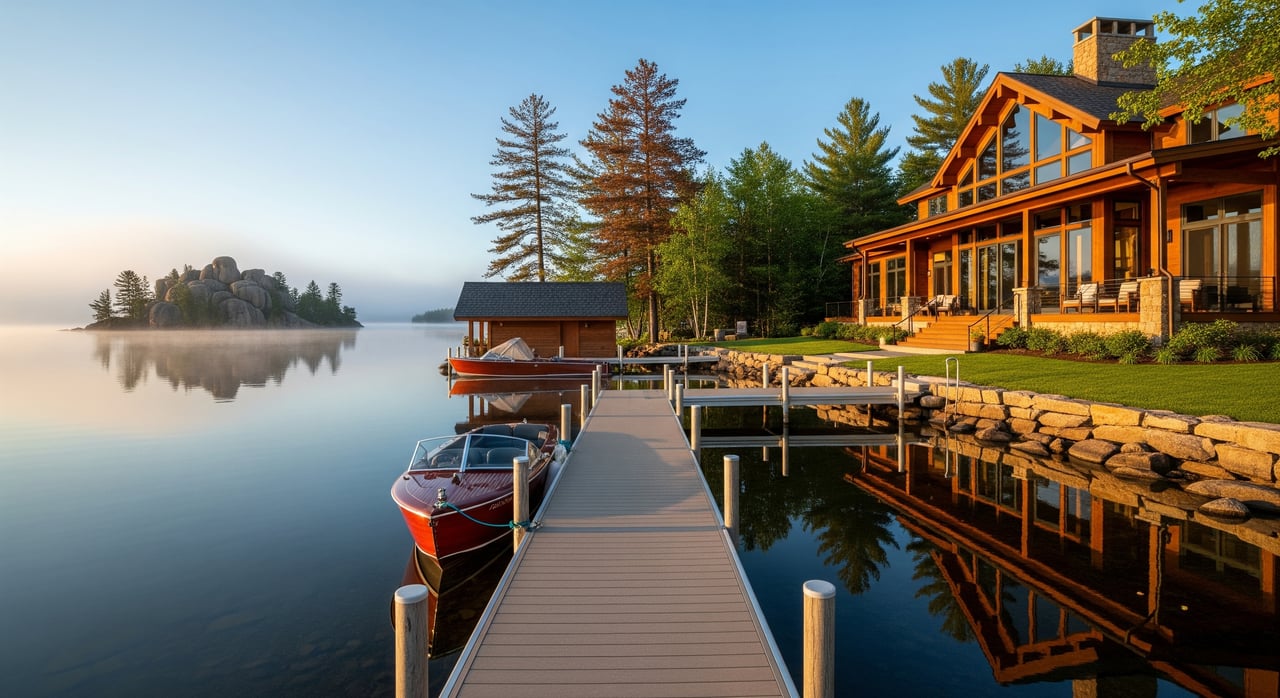
Boat access is a major pricing factor. Properties with permanent slips, lifts, or guaranteed dock spaces are more valuable because they secure boating convenience. Some homes on the chain have deeded dock rights or association docks, while others rely on private removable docks.
Confirm how many slips you can keep, what permits apply, and whether seasonal install and removal are your responsibility. These details directly affect usability and carrying costs.
Utilities and year-round readiness
Year-round utilities and winterization drive pricing differences between rustic cabins and modern year-round homes. Buyers often pay a premium for properties with reliable electric service, municipal water or sewer where available, modern heating, and insulation that protects pipes in winter.
Road access matters too. Ask if the driveway and roads are plowed and maintained year-round. If you plan to convert a cabin to full-time use, confirm that the systems, insulation, and access support winter living.
Rules and permits that shape value
Crow Wing County Shoreland Ordinances govern setbacks, vegetation removal, and impervious surface limits. These rules determine what is buildable and what expansions are allowed. You may also need permits for docks, shoreline work, or activity in wetlands.
Check for easements, conservation areas, or utility corridors on the lot. These can limit where you build and how you use the property, which affects value and future plans.
Market forces, comps, and timing
Local comparable sales are your best pricing guide. Focus on recent sales on the same lake within the past 6 to 12 months when possible. Seasonality can influence days on market, with peak buyer activity in spring and summer. Taxes, special assessments, or lake improvement district fees can change carrying costs and should be part of your comparison.
Cabins vs. year-round homes: what changes price
Two properties with similar frontage can be priced far apart based on condition and systems. Here is how the differences tend to play out.
Purchase and carrying costs
Year-round homes usually sell at a premium because they offer finished space, upgraded systems, and permitted additions. Property taxes depend on assessed value and classification, and seasonal or secondary homes may not qualify for the same benefits as a primary residence. Insurance can also be higher on lakeshore and vary by property use.
Renovation and modernization costs
Converting a seasonal cabin to full-time use often requires upgrades. Budget for insulation improvements, septic or well review and possible replacement, HVAC updates, and electrical work. Driveways and access may need adjustments for winter standards. Shoreland setbacks and local rules can limit your expansion plans.
Financing and appraisal
Lenders consider property condition and occupancy. Conventional financing can work for seasonal properties, but some older cabins may not meet VA or FHA habitability requirements. Appraisals for cabins can be more volatile due to fewer direct comps, so appraisers make adjustments for frontage and improvements.
Resale and liquidity
Turnkey, modern year-round homes tend to appeal to a broader buyer pool and may hold value better in slower markets. Rustic cabins attract a niche buyer. That can mean longer marketing time and a greater chance of pricing concessions at resale.
Maintenance and operations
Year-round homes demand regular system maintenance, especially for heating. Seasonal cabins avoid heating all winter, but you will manage winterization and de-winterization each year. Dock and shoreline maintenance are ongoing ownership responsibilities that should be budgeted.
A practical due diligence checklist
Use this checklist to gather apples-to-apples facts before you compare prices:
- Lake name and spot in the chain, main basin or bay
- Linear feet of private frontage and whether it is deeded and usable
- Frontage type: open water, bay, canal, or shared
- Shore composition: sand, rock, or wetland influence
- Lot details: dimensions, acreage, buildable area, slope, and measured setbacks
- Dock and moorage: number of slips, lift, deeded rights vs. permit status
- Water depth at the end of the dock for navigation
- Utilities: electric, municipal water or sewer, propane, well depth and yield, septic type and age
- Year-round access: public road, private road association, and plowing
- Building details: year built, square footage, insulation level, heating system, and winterization evidence
- Permit history: docks, seawalls, additions, and whether permits were obtained
- Environmental checks: flood zone, known wetland, and any AIS presence noted for the lake
- Taxes and assessments: current assessed value, recent taxes, and any lake district fees
- Recent comparable sales on the same lake within 6 to 12 months
How to compare two Crosslake properties
When two listings seem close in price, use a simple framework:
Frontage and usability. Weigh open water views, usable sandy shore, and straightforward dock access. A smaller lot with better usability can beat a larger but boggy shoreline.
Lake identity. Consider water clarity, depth, and recreation. Lakes with strong reputations often command a premium.
Year-round readiness. Confirm insulation, heating, water and sewer systems, and plowed access. If upgrades are needed, estimate those costs now.
Rules and room to grow. Check setbacks, impervious surface limits, and easements. If you want to add space later, confirm it is feasible.
Comps and carrying costs. Compare recent same-lake sales and note taxes, insurance, and any special assessments.
The bottom line for Crosslake buyers
Lake home pricing on the Whitefish Chain is a mix of frontage quality, lake reputation, lot usability, dock rights, utilities, and local rules. Modern year-round homes tend to price higher but offer broader resale appeal and simpler financing. Rustic cabins can be a better entry point if you plan and budget for upgrades.
If you want a clear, side-by-side comparison of specific Crosslake listings, we can help you gather the right facts, model true costs, and align your choice with how you plan to use the property. Start your concierge consultation with Doro Real Estate.
FAQs
How much does lake frontage add to price in Crosslake?
- Price per waterfront foot varies by lake, frontage type, and parcel quality. Open water frontage with contiguous buildable area often fetches a premium, so compare recent sales on the same lake.
How important is dockage on the Whitefish Chain?
- Very important. Deeded slips, permanent lifts, or guaranteed dock spaces increase value and convenience. Shared or no dock access usually lowers price and adds uncertainty.
Are there extra taxes or assessments for lakeshore properties?
- Property taxes depend on assessed value and local levies. Check for any lake improvement district fees or special assessments that affect your carrying costs.
Can I convert a seasonal cabin to a year-round home in Crow Wing County?
- Often yes, but plan for insulation and heating upgrades, septic and well checks, year-round road access, and permits. Shoreland setbacks and zoning rules can limit expansions.
Do I need special insurance for a Crosslake lake home?
- Lakeshore homes can have higher premiums, and flood insurance may be required if a property is in a FEMA zone. Get quotes early to understand your total cost.
How do aquatic invasive species affect a lake home’s value?
- AIS can influence recreational use and maintenance. Buyers often prefer lakes without established AIS, but local monitoring and management programs can help preserve value and enjoyment.